The Issue
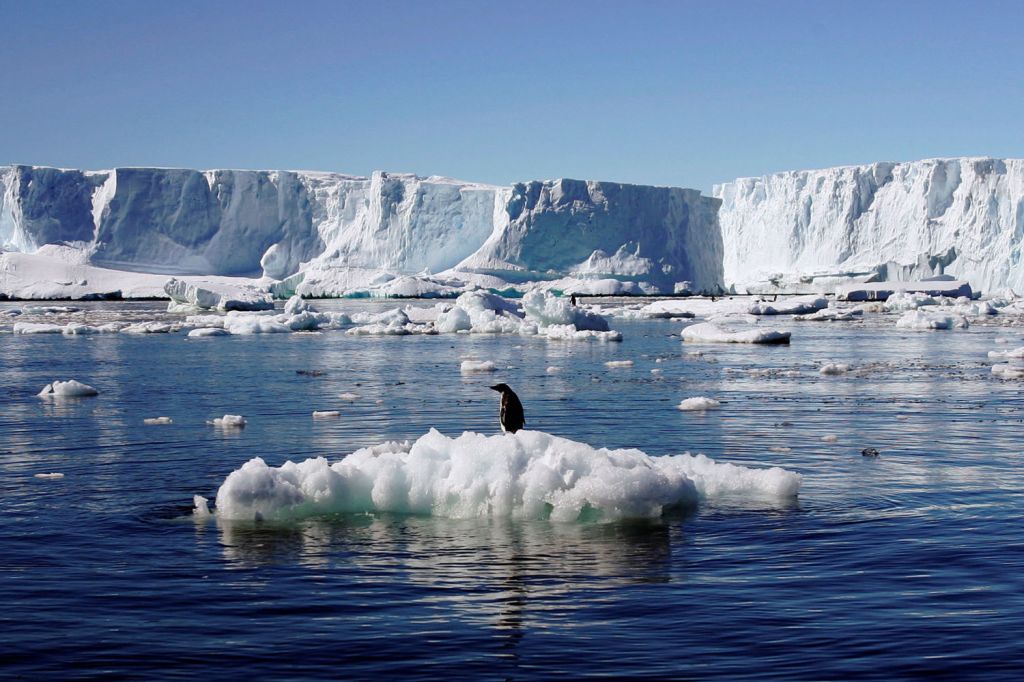
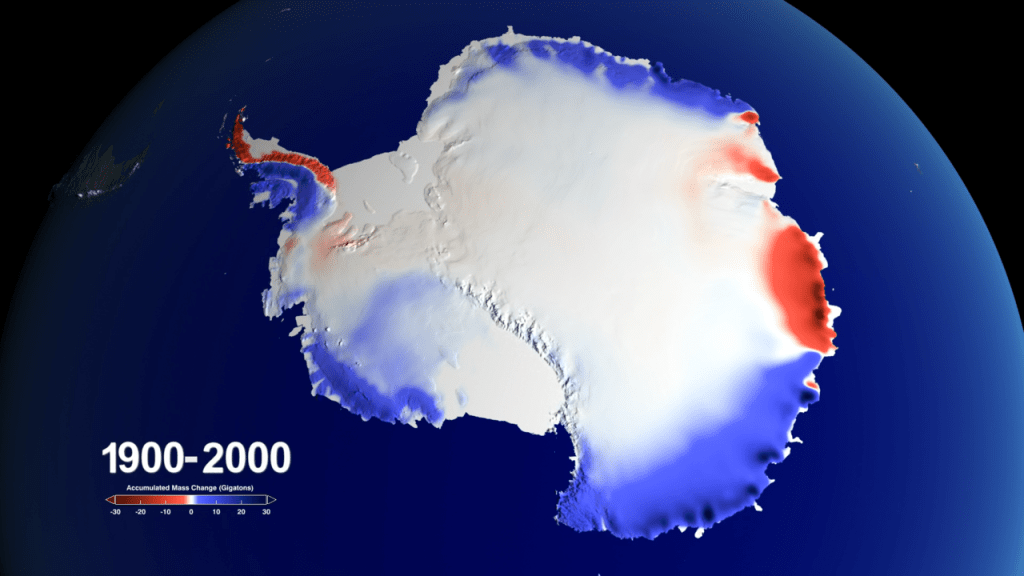
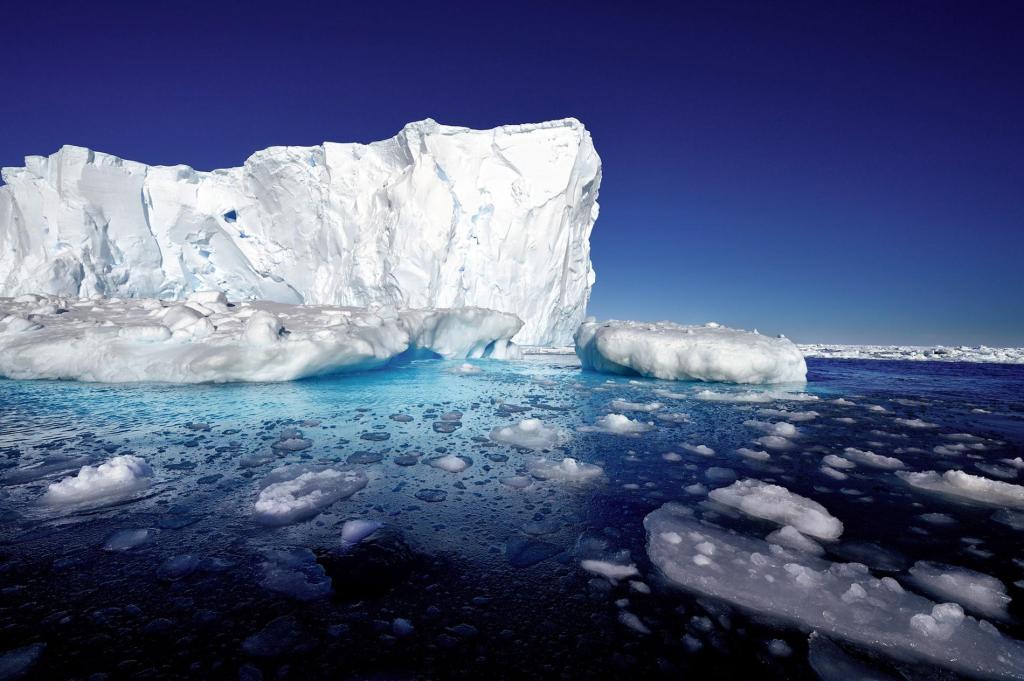
For years now, glaciers melting has been an ongoing issue in the world, and Antarctica is one of the most problematic areas. What exactly is even happening? Global temperatures have been steadily increasing over the last few years; whether that is due to greenhouse gasses, burning of fossil fuels, or something beyond our control. Unsurprisingly, this is negatively affecting our environment and causing us to have to adapt to these changes. How could ice melting have any affect on me? At the rate we are going right now, by the year 2100, Antarctica alone could possibly contribute 16 inches of water to the world’s oceans (Borunda 2019). Rising sea-levels create flooding, habitat destruction, and even risk of submerging islands/land. The second most worrisome effect the glaciers have on the Earth is the releasing of toxicants. Glaciers can easily store dirt, bacteria, chemicals, and many other things for thousands of years. If these glaciers melt, these factors are being released into the ocean which will later make its way into rivers and streams. Many people around the world rely on these waterways as their main water source, so their water could easily become polluted and even dangerous. These are the two most hazardous results of glaciers melting; others include: re-emerging diseases, smothered sea life, flooded rivers, and changing coastlines (Kingdon 2018). Even though we all cannot see how rapidly Antarctica is melting away, research shows just how drastic this problem is for our Earth. According to Scientific America, “The continent is now losing six times more ice than it was in the 1980’s” (Thompson 2019). With this information in mind, all Antarctica’s ice could easily melt by the year 2100. This melting is affecting more people than one might think, so who are the stakeholders? Starting with the obvious, people in this continent and the animals living here. There is currently no one permanently living in Antarctica; however, there are quite a few research stations that temporarily house scientists in the warmer months. There are also several different species of animals that call Antarctica home. For example: different species of penguins, seals, killer whales, krill, and polar bears to name a few (Antarctic 2017). All of these animals are losing their habitat and are at a great risk of extinction. Less obvious stakeholders include icebreaking ships and people in other continents. Icebreaking ships are people traveling who break up ice in their path. This exposes the ice to more sun which speeds melting up and, therefore, speeds up the bigger issue. Not only does Antarctica have an affect on its community, but it could have an affect on your community. Previously, I mentioned that icebergs can hold bacteria, dirt, and even some diseases. If this all gets released, it could easily wash up and make its way to you sink. These organisms could also be harmful to the ocean fish and other seafood. The ocean plays some kind of role in nearly everybody’s life. That could be relying on the ocean for our source of water or fishing, or even accidentally coming into contact with it. Antarctica’s glaciers melting can and will impact our oceans and our future lifestyle. We must do everything we can to stop, or significantly slow down, Antarctica’s melting process. We must learn to live sustainably.
The Stakeholders
Icebreaking ships
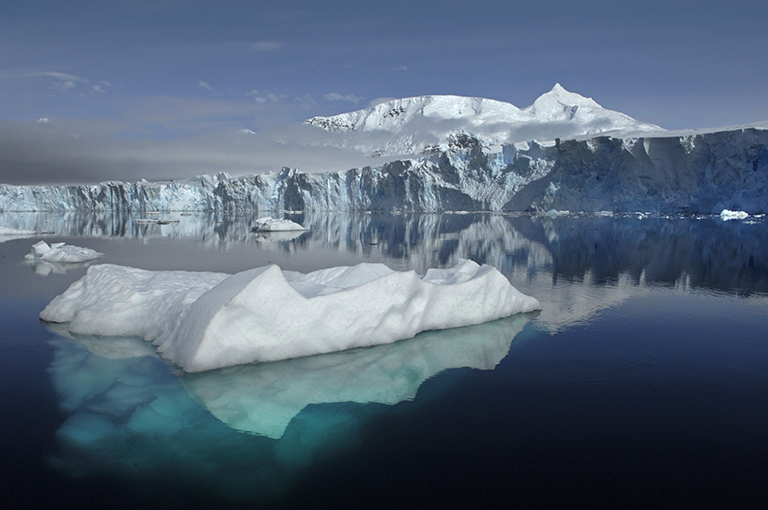
Icebreaking ships travel through and around Antarctica breaking up the ice along their path in the summer. As the ice is broken down, the ocean water is more vulnerable to the sun rays which in turn warm the water by several degrees. As the water becomes warmer, the ice melts. Arctic ice absorbs 20% of sun rays while reflecting back 80%, but as it is melting, less and less ice is able to reflect the light back and stay intact. The ocean water absorbs as much as 90% which is a huge contrast from 20%. While some argue that the icebreaking that they do is little damage, but damage is still damage. Especially with the glaciers and the Arctic ecosystem being so fragile, it will not take much for deterioration. In the end, the employees of icebreaking ships are not the top cause of glacier melting and climate change in the Arctic, but their actions are still effective. (National Snow and Ice Data Center 2020).
Humans On Other Continents
It’s no secret that many of what humans do on a daily basis negatively affects the environment. Ever since the industrial revolution, we have been on a one-way track to a suffering environment. “These gases absorb heat being radiated from the surface of the earth, and by absorbing this heat the atmosphere slowly warms up. Heat-trapping gases, sometimes called “greenhouse gases,” are the cause of most of the climate warming and glacier retreat in the past 50 years.” Humans are involved unintentionally. No one planned on the negative effects, but while most know how it is affecting the environment, they have yet to stop. The gases overtake the air, not just in one country, but everywhere. So, the air surrounding Antarctica becomes warmer allowing the water to melt the glaciers as well as the temperature in general. It is an ongoing process and as I said before, no one plans on ceasing as the companies that allow this to happen are making a living off of it; which to them, is all that matters. (Hancock, Lorin 2020.)
Animals
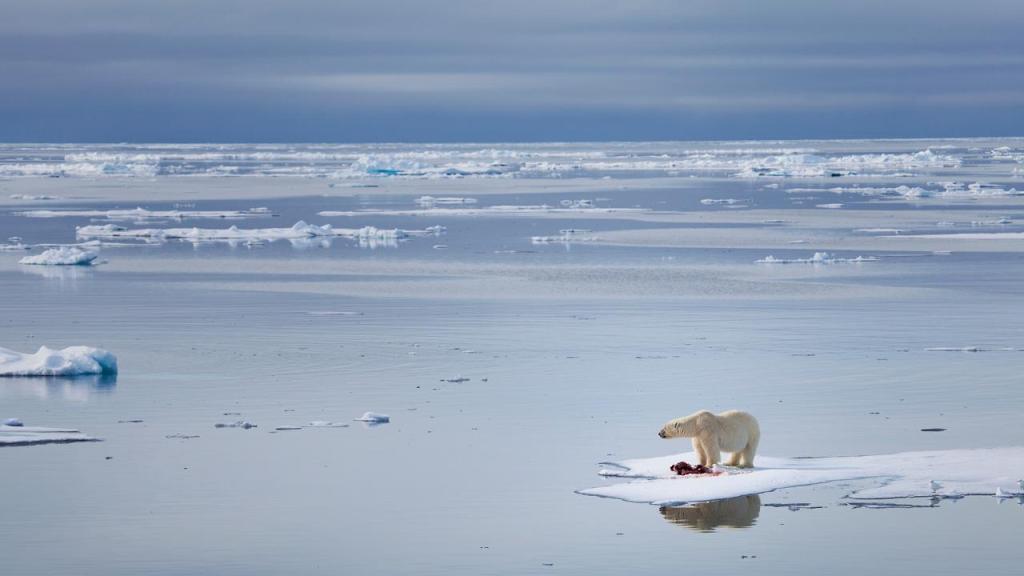
When people think about Antarctica, of course they think of the glaciers, but the animals as well. Polar bears, penguins, fish, snow leopard, etc. These animals are being put directly in danger with the glacial melting as glaciers are their habitat and home. If they are lucky enough to survive, they are left struggling to find cold enough weather, food, or a home to stay all the while running from the warm weather, constantly moving. It is to the point where some of these beloved species are at risk for going completely extinct. Once any species goes extinct, the whole food chain would be affected greatly. With no glaciers or land ice in general, these animals are forced to spend most of their time in the much warmer ocean water which affects their way of getting food as well as surviving in general. Having babies is more dangerous than beneficial. Thus, risking the end of their species. (Arctic Climate Change 2020).
Researchers
WGMS stands for the World Glacier Monitoring Service. This organization has been together for more than a century. Their goal is to constantly watch the glaciers that are all over the world and record their observations and progress. In addition to observing, they enlist ways that can help the issue and make sure people of this earth are aware in hopes that something will change. They have noticed in the past years that glaciers are on a steep decline and have observed that they will not be around for long. (world glacier monitoring service 2019).
While WGMS tracks the rate of glacier melting, there are other research groups and scientists that work hard to study the causes and find ways to prevent them. There are multiple research groups around the world such as The Ohio State University Byrd Polar and Climate Research Center as well as Steffen Research Group at the University of Colorado. These groups along with the others allow people to see inside the problem and find ways to prevent them.
Scholarly Positions
Just like in any other issue, there will always be two sides of the story. In this case, there are several different perspectives on the glaciers melting issue. One article I found talked about the “hidden hazards” of glaciers melting in Chile. The authors go on to say, “Melting glaciers can release nutrients and pollutants into glacial rivers, which further erode watersheds and contaminate downstream environments” (Zhang 2017). They specifically talk about how ice sheets can transport high levels of iron into smaller streams. Many people use these streams as their main source of water or for fishing. This made me think about how nearby continents and oceans can be affected by Antarctica’s glaciers melting. How could such things, like iron, affect the people using the oceans to survive? This brings in the second article I used for research. As of 1997, several nations had come together to look for a solution to the oceans getting polluted with trash. One proposal they came up with was using the internet to create a global clearing house of the most current scientific/technological knowledge and later be shared by governments, industries, and academic institutions (Baker 1996). At this time, and still to this day, there is not really a simple way to find the best, most affordable, solution. This could be the solution we were looking for that could, efficiently, save the world. One of the biggest concerns about glaciers melting according to the evidence taken from these articles is rising sea-levels. Some possible physical impacts include: disappearing low-land islands, submergence/increased flooding in coastal areas, saltwater intrusion of freshwater, increased erosion, and habitat loss (Sea-level Rise 2013).
Climate Change is an environmental issue that people from all different parts of the world face. In a specific example/study, Justin Worland discusses climate change in a specific place, Fiji. The Island of Fiji has experienced harsh effects of climate change over the years. “Intense storms and flooding have pounded Fiji’s islands, leaving the country to anticipate losing assets worth 5% of its GDP each year, a number expected to grow in the coming decades.” (Worland 2019). Not only Fiji, but other surrounding islands as well are losing people, income, aspects of their culture and nature due to all things climate change. Even things as far as the glaciers of Antarctica affect Fiji and the entire world. Worland discusses Fiji’s attempt to come together with other developed countries to convince them to help with the rapid increase of this change, but as we all well know, it is chalked up to “business as usual.”
In conclusion, climate change doesn’t just affect the glaciers and the surrounding environment of Antarctica. It affects the entire global ecosystem and if we do not come together to make a change soon, we will see changes worse and worse until the beautiful world we get to live in will cease to exist.
Alyssa’s Articles:
Zhang, Qianggong, et al. “Melting Glaciers: Hidden Hazards.” Science, vol. 356, no. 6337, 2017, doi:10.1126/science.aan4118.
Baker, B. “Washington Watch: Nations Coming to Agreement That Polluted Oceans Need a Cleanup.” BioScience, vol. 46, no. 3, 1996, pp. 183–183., doi:10.1093/bioscience/46.3.183.
“Sea-Level Rise.” Managing Ocean Environments in a Changing Climate: Sustainability and Economic Perspectives, by Kevin J. Noone, Elsevier, 2013, pp. 97–126.
Gabriella’s Articles:
Worland, Justin. 2019. “This Island Is Sinking. (Cover Story).” TIME Magazine 193 (24): 30-37. http://search.ebscohost.com.ezproxy.uky.edu/login.aspx?direct=true&db=a9h&AN=136963549&site=ehost-live&scope=site
Sources:
“Arctic Climate Change.” Arctic Climate Change: 5. How will animals be affected by Arctic warming? Accessed March 29, 2020. https://www.greenfacts.org/en/arctic-climate-change/l-2/5-arctic-animals.htm.
“Antarctic Animal Pictures – National Geographic.” Antarctic Animal Pictures – National Geographic, National Geographic, 18 July 2017, www.nationalgeographic.com/animals/photos/antarctic-animals/.
Borunda, Alejandra. “Most Dire Projection of Sea-Level Rise Is a Little Less Likely, Reports Say.” Antarctica’s Ice Is Melting, but the Scariest Prediction for the Future May Be on Hold, National Geographic, 6 Feb. 2019, www.nationalgeographic.com/environment/2019/02/antarctic-greenland-ice-melt-less-bad/#close
“Cooperative Institute for Research in Environmental Sciences.” Konrad Steffen Research Group, CIRES/University of Colorado. Accessed March 29, 2020. https://cires1.colorado.edu/science/groups/steffen/.
“Glacier Dynamics Research Group.” Byrd Polar and Climate Research Center, January 8, 2020. https://byrd.osu.edu/research/groups/glacier-dynamics.
Kingdon, Amorina. “Melting Glaciers Do More Than Raise Sea Levels.” Hakai Magazine, 9 Mar. 2018, www.hakaimagazine.com/article-short/melting-glaciers-do-more-than-raise-sea-levels/.
“National Snow and Ice Data Center.” Are icebreakers changing the climate? | National Snow and Ice Data Center. Accessed March 28, 2020. https://nsidc.org/cryosphere/icelights/2012/04/are-icebreakers-changing-climate.
Thompson, Andrea. “Here’s How Much Ice Antarctica Is Losing-It’s a Lot.” Scientific American, Scientific American, 30 Jan. 2019, www.scientificamerican.com/article/heres-how-much-ice-antarctica-is-losing-mdash-its-a-lot1/.
“Why Are Glaciers and Sea Ice Melting?” WWF. World Wildlife Fund. Accessed March 29, 2020. https://www.worldwildlife.org/pages/why-are-glaciers-and-sea-ice-melting.
world glacier monitoring service. Accessed March 29, 2020. https://wgms.ch/.
Pictures:
“Antarctic Sea Ice Reaches New Record Maximum – Climate Change: Vital Signs of the Planet.” NASA. NASA, October 9, 2014. https://climate.nasa.gov/news/2169/antarctic-sea-ice-reaches-new-record-maximum/.
“Antarctica’s Contribution to Sea Level Rise Was Mitigated by Snowfall – Climate Change: Vital Signs of the Planet.” NASA. NASA, December 13, 2018. https://climate.nasa.gov/news/2836/antarcticas-contribution-to-sea-level-rise-was-mitigated-by-snowfall/.
Borunda, Alejandra. “Most Dire Projection of Sea-Level Rise Is a Little Less Likely, Reports Say.” Antarctica’s ice is melting, but the scariest prediction for the future may be on hold, February 6, 2019. https://www.nationalgeographic.com/environment/2019/02/antarctic-greenland-ice-melt-less-bad/.
Nicola Jones, Nicola Jones, Nicola Jones, Nicola Jones, Nicola Jones, Gabriel Popkin, Gabriel Popkin, et al. “Polar Warning: Even Antarctica’s Coldest Region Is Starting to Melt.” Yale E360. Accessed March 31, 2020. https://e360.yale.edu/features/polar-warning-even-antarctica-coldest-region-is-starting-to-melt.
“Using an IPhone to Document Climate Change in Antarctica.” PetaPixel, March 22, 2020. https://petapixel.com/2020/03/20/using-an-iphone-to-document-climate-change-in-antarctica/.
Worland, Justin. “Climate Change: Antarctica Ice Melts Faster Than Believed.” Time. Time, April 19, 2017. https://time.com/4745827/antarctica-water-climate-change/.
“It’s like watching the Statue of Liberty melt.”

 Climate Change in Antarctica